
Alternatives to Traditional Psychiatry
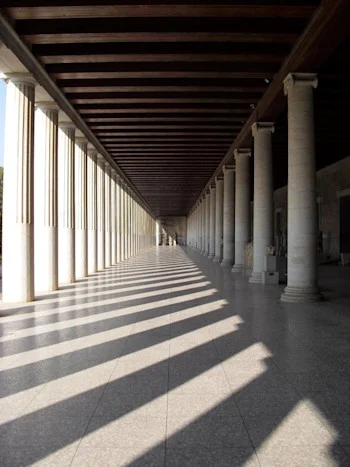 Stoa of Attalos, Ancient Agora, Athens, Greece
Alternatives to Traditional Psychiatry brings together materials from people who questioned the assumption that unusual, extreme, or difficult states of mind must be met first with control, confinement, diagnosis, or suppression. This inquiry was deeply personal for Dick Price. After spending a year confined in a private psychiatric hospital, where he was given electric shock and insulin shock treatments and medicated against his will, he carried a lifelong concern for what happens when human distress is met without real contact. That experience helped shape his vision, with Michael Murphy, for Esalen Institute as a place where people could be met differently: in a natural setting, with listening, movement, nourishment, honest contact, and respect for the meaning of their experience.
This room gathers writings and recordings from those who explored more humane and creative responses to altered states, psychosis, emotional crisis, and spiritual emergence. Rather than treating these experiences only as symptoms to be managed, these materials ask what becomes possible when a person is accompanied by attention, dignity, and room to move through what is arising. The collection includes work by people associated with anti-psychiatry, therapeutic communities, experimental mental health programs, and consciousness research, along with materials connected to Dick Price’s support for alternatives such as the Agnews Ward and related efforts in approaches to mental health in California. Together, these resources invite a more searching question: What helps a person in crisis return to relationship, meaning, ground, and life?
This room will include references to and materials by R. D. Laing, Thomas Szasz, Julian Silverman, John Perry, Stan Grof, and Michael Cornwall among others whose work challenged conventional psychiatric assumptions and opened other ways of understanding madness, crisis, altered states, and spiritual emergence. These figures did not all agree with one another, and their approaches differ in important ways, but each contributed to a larger conversation about how human beings can be met in states of profound disruption without reducing the person to a diagnosis or the experience to pathology alone.