
Psychology
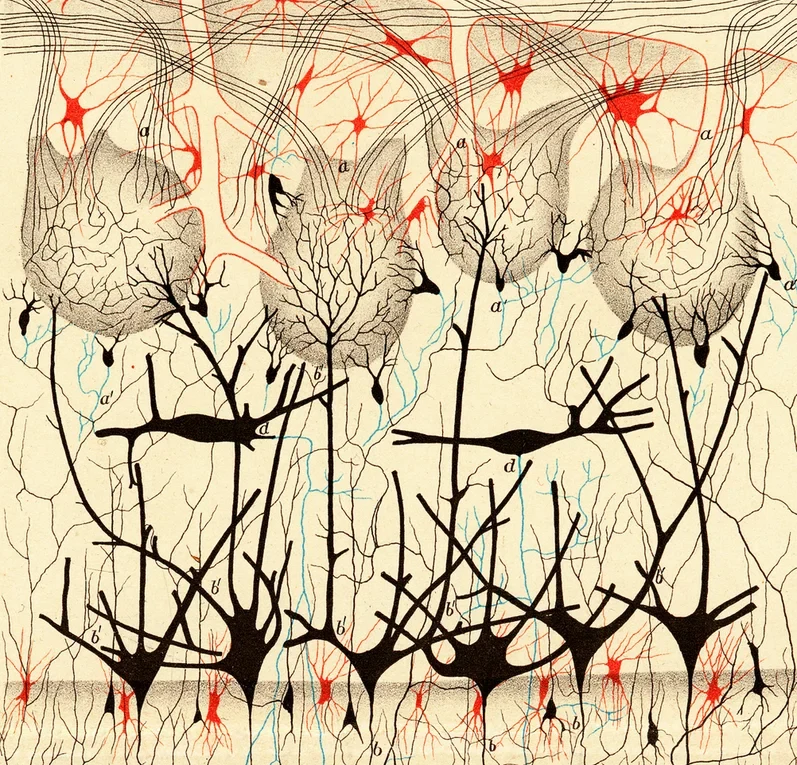 Camillo Golgi
Dick Price’s interests, and those of his colleagues, were wide-ranging. Innovation and experimentation stretched the previous boundaries of what was called psychology. In the process, it became clear that the sciences exploring what it means to be human do not fit neatly into traditional categories. How things are sorted in this archive may be open to question, yet the history and variety of what is gathered here invite curiosity.
The materials in this room reflect the explorations that helped shape modern approaches to psychology. In the mid-twentieth century, inquiry began to push beyond conventional definitions of psychological study. New perspectives emerged that integrated body, mind, and environment, suggesting that the study of human experience could not be contained by old paradigms. Drawn largely from the collected materials of Richard (Dick) Price, this archive includes lectures and writings from many sources. While the range is broad, the greatest concentration centers on the work of Fritz Perls and the evolution of Gestalt psychology—a primary influence on what Price developed under the name gestalt practice.
Later this year, we will be uploading materials from Dick's Archive here.