
Somatic
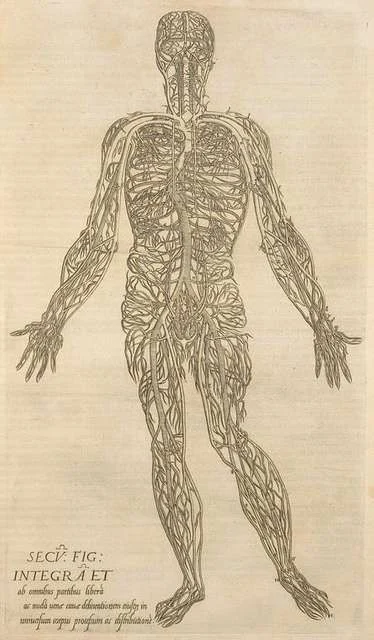
Somatic means “of or relating to the body” and comes from the Greek sōma, meaning “body.” The root carries the sense of the body as a physical organism, but in later uses it came to mean not merely the body as an object, but the body as lived and experienced.
Thomas Hanna helped define the field of somatics, writing that somatics focuses on “the body as perceived from within by first-person perception.” In this sense, the body is not only something observed from the outside, but something directly lived: felt from within through sensation, movement, breath, tension, release, posture, emotion, impulse, and awareness. This contrasts with the body viewed from the outside: measured, diagnosed, corrected, strengthened, or trained.
So somatic does not simply mean “physical.” Physical can refer to the body as an object. Somatic, in its richer contemporary use, refers to the body as experienced from within — the body sensed, inhabited, attended to, and learned from.
In therapeutic contexts, somatics often refers to body-centered approaches that explore how experience, stress, pain, memory, or trauma may be expressed through the body, and how awareness of sensation, movement, breath, and nervous-system response can support healing and integration. In movement, touch-based bodywork, and dance, somatic practices emphasize internal awareness, embodied learning, movement repatterning, ease, coordination, and sensing from within. Somatic movement education is often associated with practices such as Feldenkrais, the Alexander Technique, Body-Mind Centering, Continuum movement, Trager, and Authentic Movement, among others.