
Diane Pendola: The Lioness Tale Prison Project
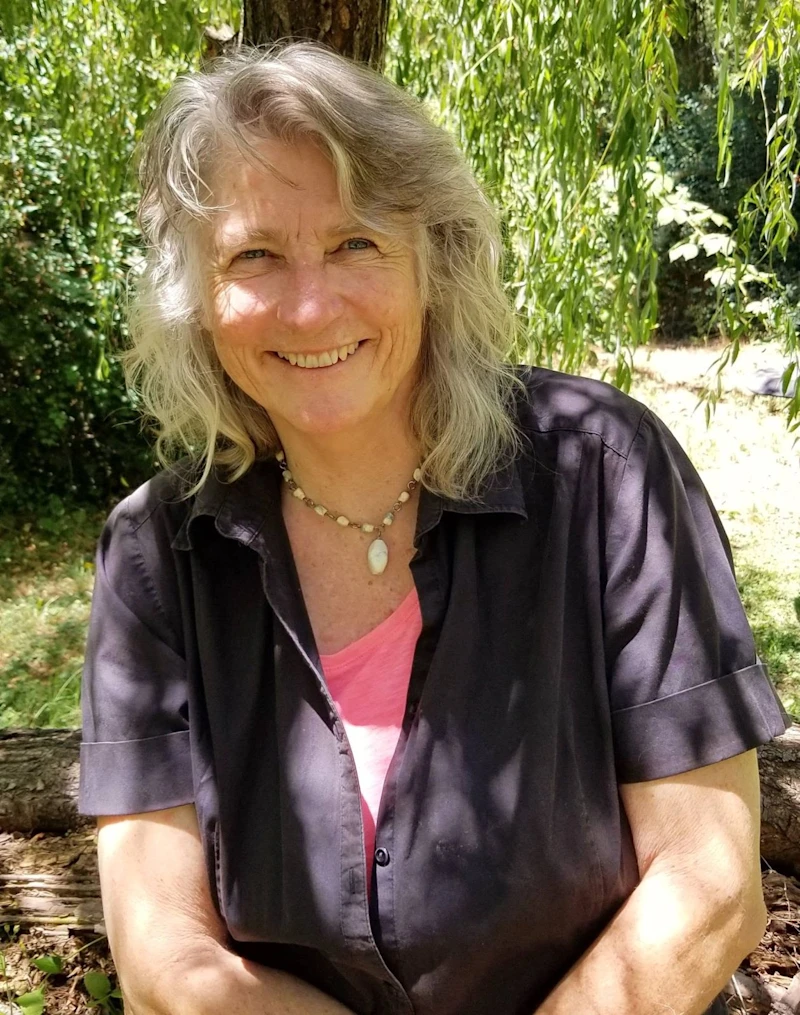 Photo credit: Camptonville Courier
Diane has been a contemplative presence in county jails and prisons since 1986, when she completed her master’s degree in theology. In her graduate studies, she was deeply influenced by feminist and liberation theologies, with their emphases on giving voice to the voiceless and bringing the disenfranchised from the margins to the very center of authentic life. She has worked among incarcerated women for more than 30 years. This work led her to write The Lioness Tale and to found the Lioness Tale Prison Project, based on the book.
The intention of the Lioness Tale Prison Project is to awaken the inner freedom of women serving long-term to life sentences, bringing greater purpose to their lives and lighting up the prisons where they live from the inside out. The program teaches practices of awareness, contact, and communication within a prison setting. Diane is a longtime student and colleague of Christine Price, and she has woven core elements of Gestalt Awareness Practice (GAP) into the project’s weekly circles—including the essential practices of Taking Our Seat, basic breath practice, and Continuum of Awareness. This work is steady and practical: noticing what is here and now, distinguishing direct experience from thoughts and stories, and strengthening capacity to choose how we respond.
Diane has pursued her own transformation through prayer and meditation, Gestalt Awareness Practice, the Enneagram, writing, and poetry—all of which she teaches and integrates into her life and work. She is also cofounder of Skyline Harvest, a nonprofit eco-contemplative retreat in the Sierra Nevada foothills, where awareness of the sacred—within ourselves, our human community, and the other-than-human world we share—is a daily practice, grounded in her understanding that all things are possible through “the Love that resides at the center of our expanding universe and at the center of our human hearts.”
What happens in a circle
- Short settling practice (breath, posture, pace).
- Brief teaching on contact and communication (speaking for oneself, checking impact, letting pauses work).
- Guided self-expression that can include words, movement, or sound—always consensual and paced.
- Witnessing without fixing; when helpful, structured dialogues or a brief open-seat-style turn.
Why it helps
- Builds self-regulation and the capacity to pause before reacting.
- Improves communication—clear requests, boundaries, repair after conflict.
- Fosters dignity, agency, and mutual support in a challenging environment.
Program stewardship
Sharon Terry serves as president of the nonprofit that supports Lioness Tale, helping ensure GAP remains part of the program through facilitator training, materials, and ongoing coordination. Sharon’s role focuses on continuity—keeping the circles supplied, the teachers supported, and the practices accessible to participants over time.
In essence, Diane’s integration of GAP makes the project grounded, humane, and repeatable; Chris’s influence is present in the structure and tone and Sharon’s stewardship helps keep the work alive and available where it’s needed most.