
Gestalt Psychology and Gestalt Therapy
Gestalt: German, meaning "form," interpreted as "pattern" or "configuration"
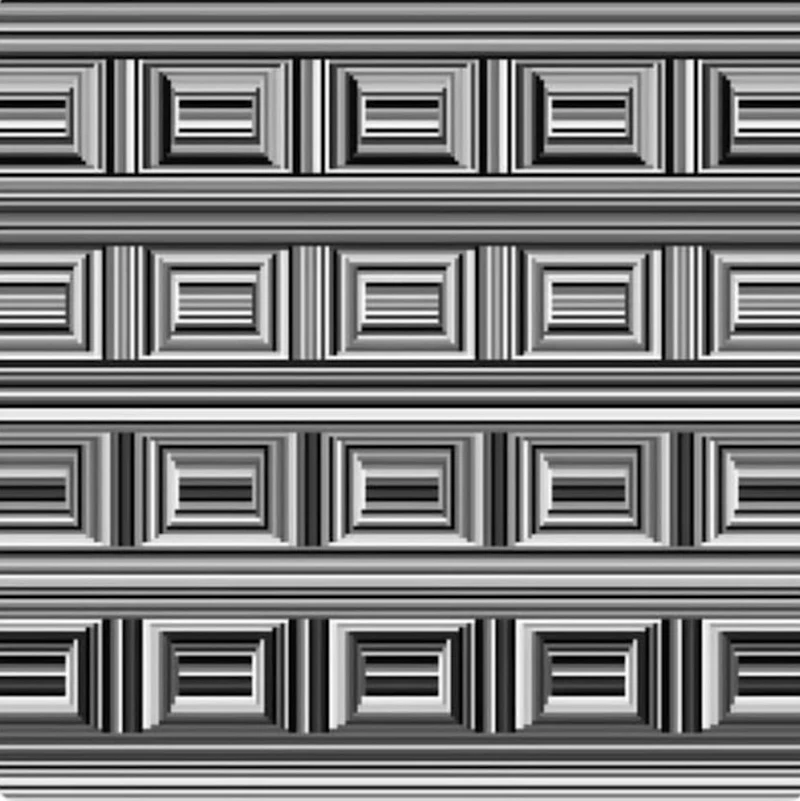 The Coffer Illusion* — What can you see?
Gestalt Psychology
Gestalt psychology is a school of psychology founded in Germany in the early 20th century. It provided the foundation for the modern study of perception. According to Britannica, “Gestalt theory emphasizes that the whole of anything is greater than its parts. That is, the attributes of the whole are not deducible from analysis of the parts in isolation.”
Key ideas in plain terms:
Figure–ground: In any scene, an element (figure) stands out against a background (ground), and attention can flip between them.
Laws of organization: The visual system groups elements by proximity, similarity, good continuation, closure, and common fate (things moving together belong together).
Apparent motion (phi phenomenon): The mind creates motion from static flashes—evidence that perception is actively organized, not a raw recording.
Insight learning: Problem solving can reorganize a whole situation at once (the “aha” moment), not just build up by trial and error. (Köhler)
Field/context: What something is depends on its surrounding conditions; context shapes perception, memory, and action.
Influence: Gestalt psychology seeded modern perception science and shaped fields like design, architecture, film, human–computer interaction, and education. It also influenced—but is distinct from—Gestalt therapy and today’s gestalt practice; the therapy/practice streams apply some gestalt principles to awareness and living, whereas the psychology school is a research tradition about how perception and thinking work.
Gestalt Therapy
Gestalt therapy is a form of psychotherapy developed later by Fritz Perls, Laura Perls, Paul Goodman, and others. It suggests that a person become more aware of what they are experiencing in the present moment—physically, emotionally, mentally, and in relationship—and notice how they interrupt, avoid, or complete that experience. Compared with therapies that primarily interpret the past, challenge thoughts, or prescribe behavioral changes, Gestalt therapy works through immediate experience: what is happening in the room, in the body, and between therapist and client.
Gestalt therapy in relationship to Gestalt psychology
Gestalt therapy drew from Gestalt psychology—especially its attention to wholes, patterns, and the way a “figure” emerges from a background—but it is not simply Gestalt psychology applied to therapy. It also developed from psychoanalysis, existentialism, phenomenology, field theory, and dialogical thought.
Fritz Perls and Gestalt therapy
Fritz Perls was a primary creator of Gestalt therapy but not the only one. Many Gestalt therapists studied with Laura Perls and those who became her colleagues. The following descriptions of Gestalt therapy may or may not align with the view of other Gestalt therapists.
Fritz Perls was the primary gestalt influence in the work of Dick Price. The following description is in line with Fritz’s writing and teaching and congruent with much of the gestalt work featured in this archive:
“The idea of Gestalt therapy is to change paper people to real people … to make the hollow men of our time come to life.”
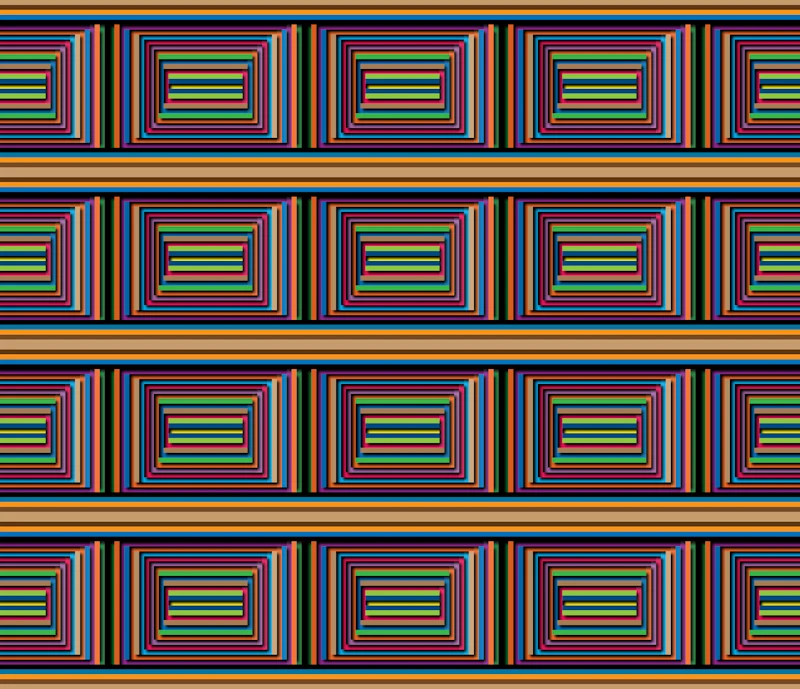 The Coffer Illusion* — What do you notice now?
For Perls, Gestalt therapy was intended to help people move beyond prescribed roles, habitual performances, and explanations about themselves and come into fuller contact with their actual experience. Its central premise is that “awareness per se—by and of itself—can be curative.” This awareness involves the whole person, understood not as “a summation of parts,” but as an organized whole in relation to an environment—a living integration of body, feeling, thought, action, and relationship.
The work takes place in present experience. Perls said that his aim was “to impart a fraction of the meaning of the word now.” Rather than relying primarily on interpretation or talking about experience, the invitation in Gestalt therapy is to “lose your mind and come to your senses”—to notice directly what is happening, how you are participating in it, and what you may be avoiding or leaving unfinished.
In this sense, turning “paper people” into “real people” means helping people become more present, embodied, integrated, and capable of drawing upon their own capacities. As Perls continued, the aim was to bring the “hollow men of our time” to life, to help them use their “inborn potential.”
*The Coffer Illusion was developed in 2006 by Anthony Norcia, a vision scientist and psychologist.